Active Aircraft in Indian Air Force

The Indian Air Force (IAF) has a diverse inventory that consists of aircraft built by Russia, Britain, France, and indigenous manufacturers. With over 1,700 aircraft in its fleet, the IAF operates approximately 32 combat squadrons. This mix of foreign and domestically produced aircraft ensures a robust and versatile operational capability.
IAF Jaguar:
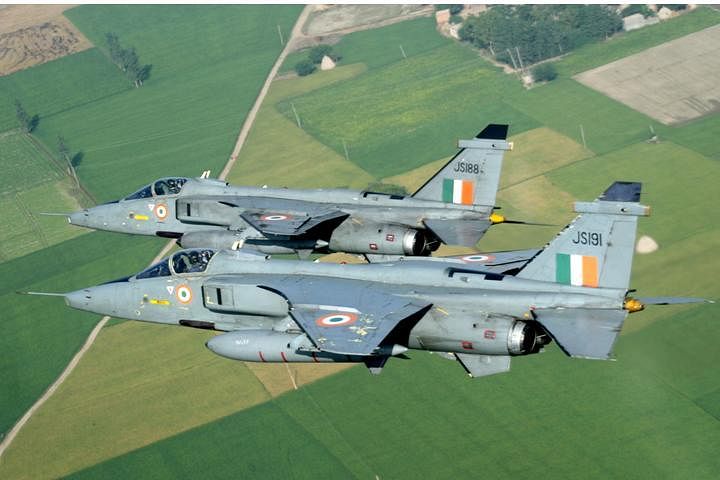
Key Specifications:
Engines: Twin Adour Mk 804 turbofans
Max Speed: Mach 1.6
Range: Approximately 850 miles (1368 km)
Armament: Typically equipped with a combination of bombs, rockets, and air-to-ground missiles
Avionics: Includes radar, navigation, and targeting systems suitable for low-level penetration and precision strike missions.
Over the years, upgrades have enhanced its avionics and mission capabilities, solidifying its role as a cornerstone of India's air defense strategy.
LCA Tejas :

The Light Combat Aircraft (LCA) Tejas, developed by Hindustan Aeronautics Limited (HAL) under the Aeronautical Development Agency (ADA) since 1984, marks India's significant stride towards indigenous aerospace capabilities. Designed to replace the aging MiG-21 fleet, Tejas features a single-engine, compound delta wing configuration with a tailless design. As the lightest and smallest multi-role supersonic fighter in its class, Tejas is equipped to carry various air-to-air, air-to-surface, and precision-guided weaponry, demonstrating India's commitment to advanced military technology and self-sufficiency in defence manufacturing.
Key Specifications:
Type: Single-engine, multirole light combat aircraft
Manufacturer: Hindustan Aeronautics Limited (HAL)
Introduction: Inducted into Indian Air Force in 2016
Engine: General Electric F404-GE-IN20 turbofan engine
Maximum Speed: Mach 1.6 (approx. 2,000 km/h)
Service Ceiling: 15,000 meters (approx. 49,000 feet)
Armament: 23 mm twin-barrel GSh-23 cannon, along with a variety of air-to-air, air-to-surface, and precision-guided munitions
Avionics: Includes a multi-mode radar, advanced electronic warfare suite, and digital flight control system.
Dassault Mirage 2000 :
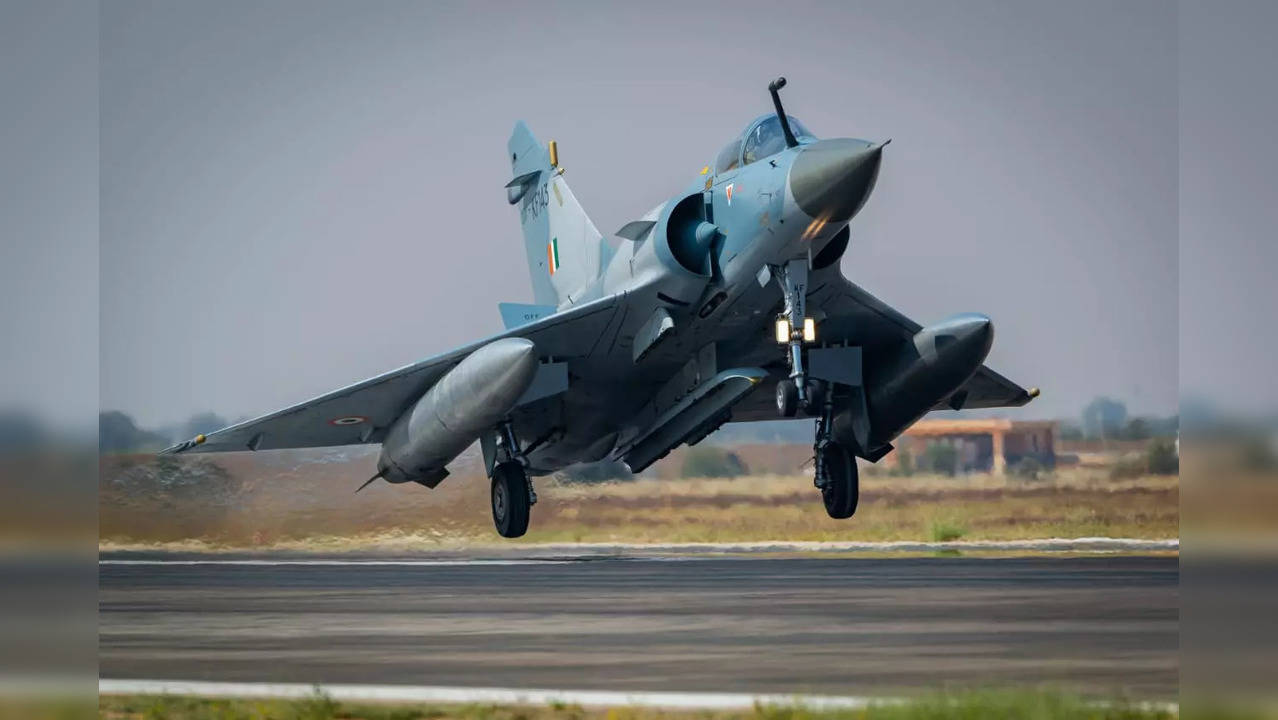
The Mirage 2000 is a prominent aircraft in the Indian Air Force (IAF), serving in various capacities since its induction in 1985. Acquired to bolster India's aerial defense capabilities, the Mirage 2000 has been involved in numerous operations and exercises, showcasing its agility, precision, and reliability. It has been upgraded over the years to enhance its avionics, radar systems, and weaponry, making it a vital asset for both air defense and ground attack missions. The Mirage 2000 continues to play a crucial role in safeguarding India's airspace and projecting air power across the region.
Key Specifications:
Role: Multirole fighter
Manufacturer: Dassault Aviation (France)
First Flight: 1978
Introduction: 1984 (French Air Force)
Engine: SNECMA M53 turbofan engine
Maximum Speed: Mach 2.2 (approx. 2,336 km/h)
Range: 1,550 kilometers (approx. 963 miles)
Service Ceiling: 17,060 meters (approx. 56,000 feet)
Armament: 30 mm internal cannon, plus a wide range of air-to-air and air-to-surface missiles and bombs
Avionics: Includes radar, electronic warfare systems, and advanced navigation and targeting equipment
Mig 29:
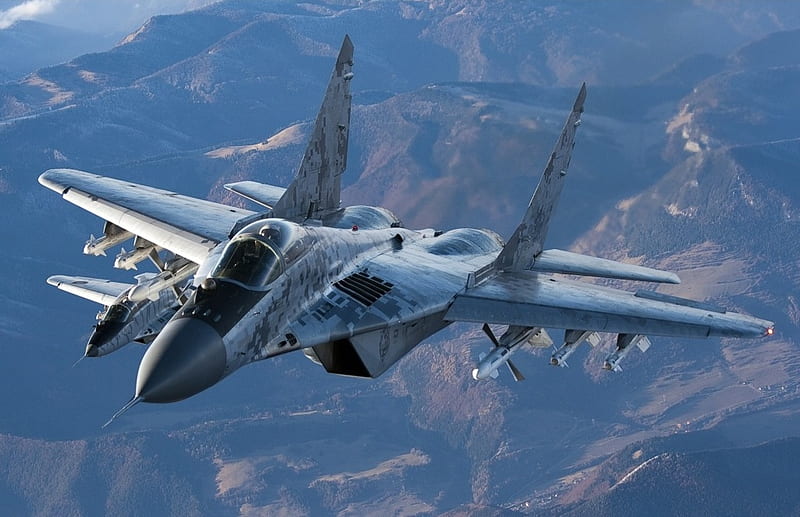
Key Specifications:
Origin: Developed by the Mikoyan design bureau in the Soviet Union, the MiG-29 is a twin-engine, multirole fighter aircraft.
Induction: The MiG-29 was inducted into the IAF in 1985-1986, marking a significant addition to India's air defense capabilities during that era.
Role: It serves primarily as an air superiority fighter but can also perform air-to-ground missions with a variety of munitions.
Specifications: Powered by twin Klimov RD-33 turbofan engines, it has a maximum speed of Mach 2.25 and a combat radius of around 1,430 kilometers.
Armament: Armed with a 30mm cannon and capable of carrying a mix of air-to-air and air-to-surface missiles, bombs, and rockets.
Sukhoi Su-30MKI :
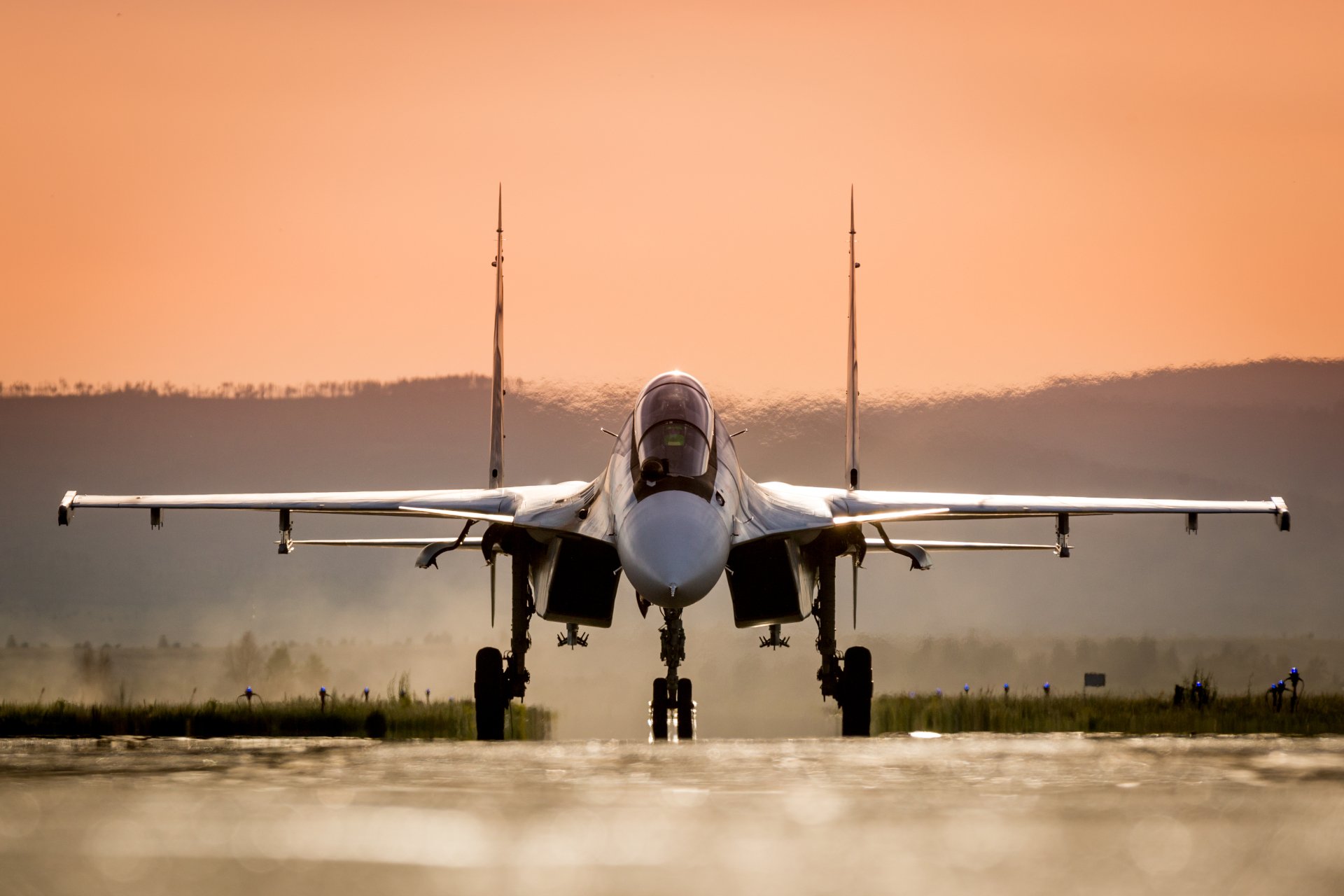
The Sukhoi Su-30MKI is a formidable twin-engine, multirole fighter aircraft jointly developed by Russia's Sukhoi and India's Hindustan Aeronautics Limited (HAL). Introduced into the Indian Air Force in the early 2000s, it combines advanced technology with robust capabilities for air superiority and ground attack missions. Equipped with powerful engines, sophisticated avionics, and a wide range of weaponry, the Su-30MKI stands as a cornerstone of India's defense strategy, ensuring aerial dominance and operational readiness in diverse combat scenarios.
Key Specifications:
Origin: Developed as a variant of the Su-30, designed by Sukhoi for the Russian Air Force.
Introduction: Inducted into the Indian Air Force (IAF) in the late 1990s and early 2000s.
Role: Multirole fighter capable of air superiority, ground attack, and maritime strike missions.
Specifications: Powered by two AL-31FP turbofan engines, capable of reaching speeds up to Mach 2 and a combat radius of over 3,000 kilometers.
Armament: Features a 30mm GSh-30-1 cannon and can carry a wide array of air-to-air and air-to-surface missiles, bombs, and rockets.
Technology: Equipped with advanced avionics, including a phased-array radar, electronic warfare suite, and digital fly-by-wire controls.
Operational Use: The Su-30MKI has been instrumental in enhancing India's defense capabilities, participating in numerous exercises and operations.
Dassault Rafale :

Key Specifications:
Acquisition: In 2016, India signed a contract with France to acquire 36 Rafale jets in a government-to-government deal.
Role: The Rafale serves as a versatile platform for air superiority, ground attack, reconnaissance, and nuclear deterrence missions.
Specifications: Powered by twin Snecma M88 engines, it achieves supersonic speeds (Mach 1.8+) with a combat range of approximately 3,700 kilometers.
Armament: It is equipped with a 30mm cannon and can carry a wide array of advanced air-to-air and air-to-ground weapons, including missiles and precision-guided munitions.
Technology: The Rafale features advanced avionics, including AESA radar, electronic warfare systems, and state-of-the-art sensors for enhanced situational awareness.
Operational Use: The Rafale's integration into the IAF enhances India's defense capabilities significantly, providing a potent asset for both defensive and offensive operations.

Comments
Post a Comment